Wallpaper for textured walls:
what actually works?
One of the biggest questions people have before ordering wallpaper is whether it will work on textured walls. Most sites just say “works on smooth walls” — but that doesn’t really answer the real problem.
The real question
Because not all textured walls are the same — what kind of wall texture do you have?
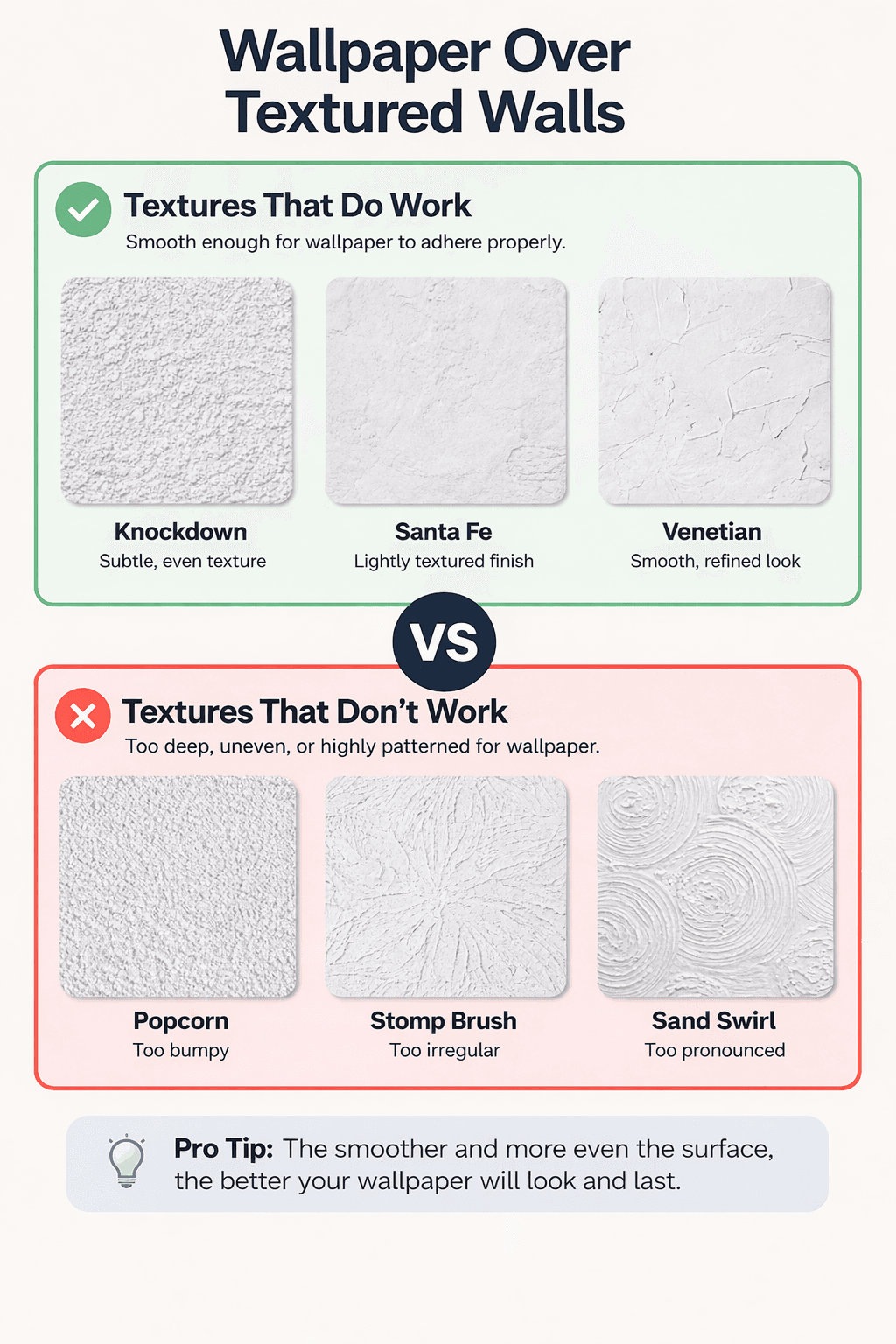
A light orange peel wall may work really well. A heavy knockdown wall may not. That one detail changes everything. This guide breaks down which textures work best, what needs extra prep, and which wallpaper styles hide bumps and seams the best.
Step one
Identify your wall texture first
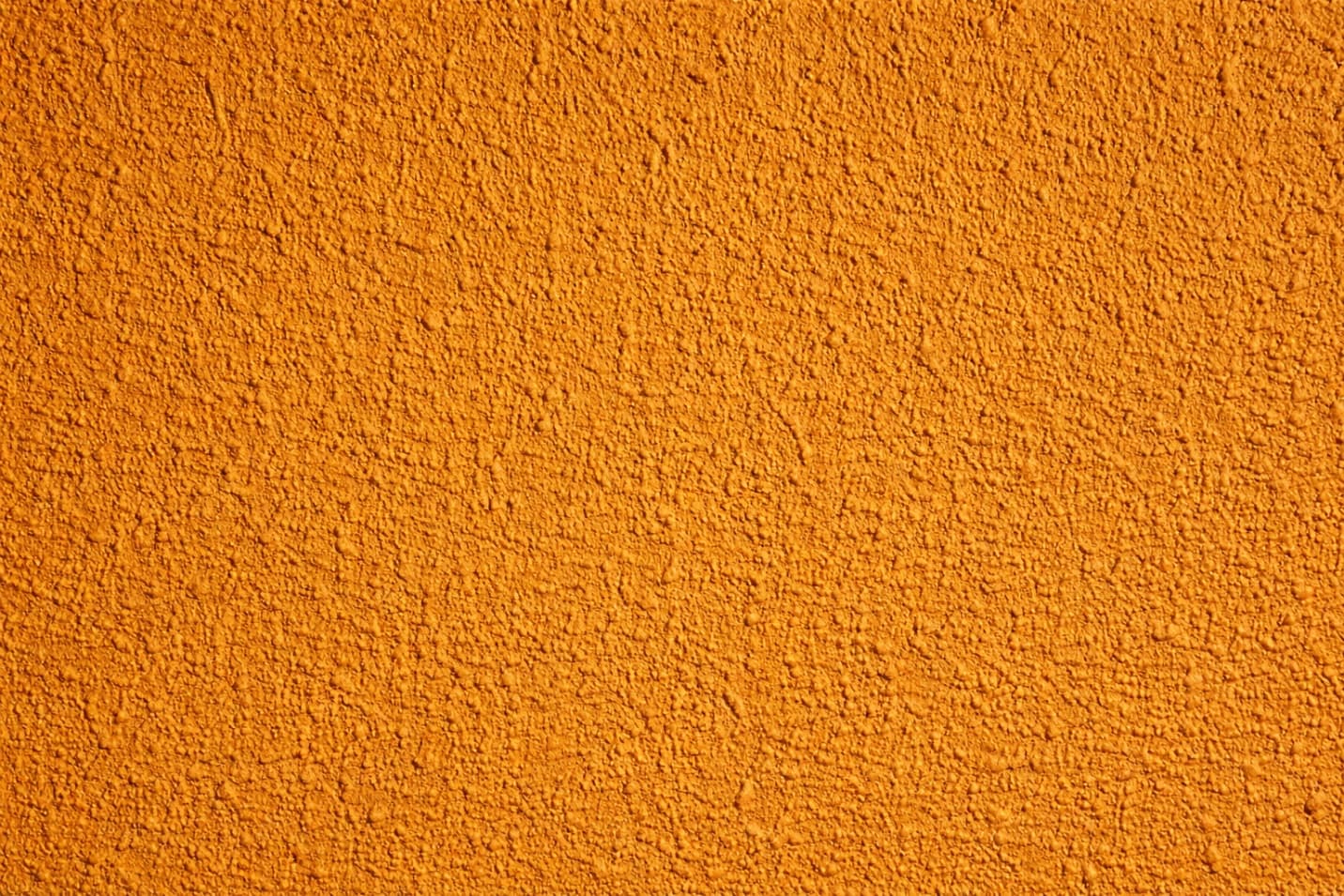
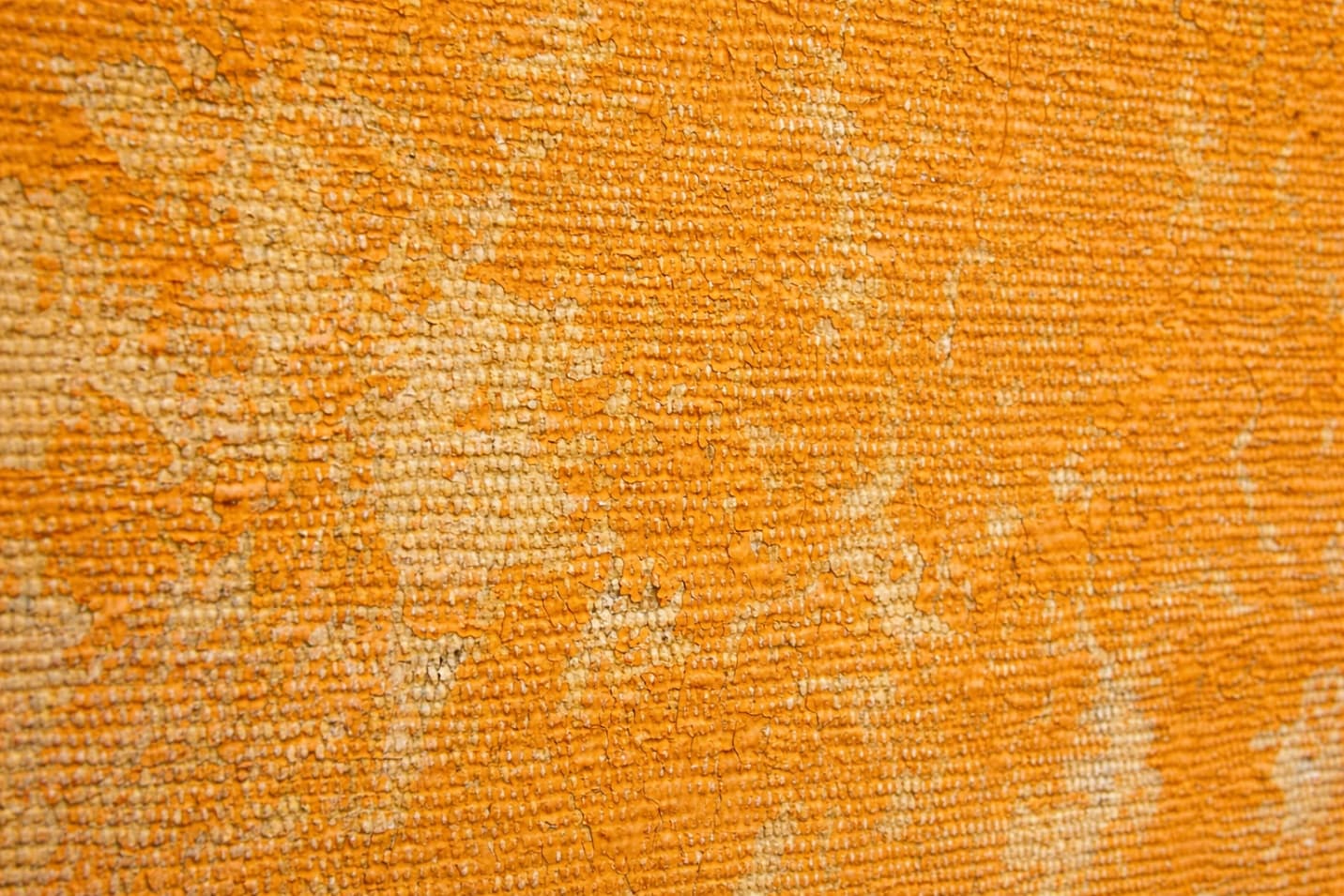
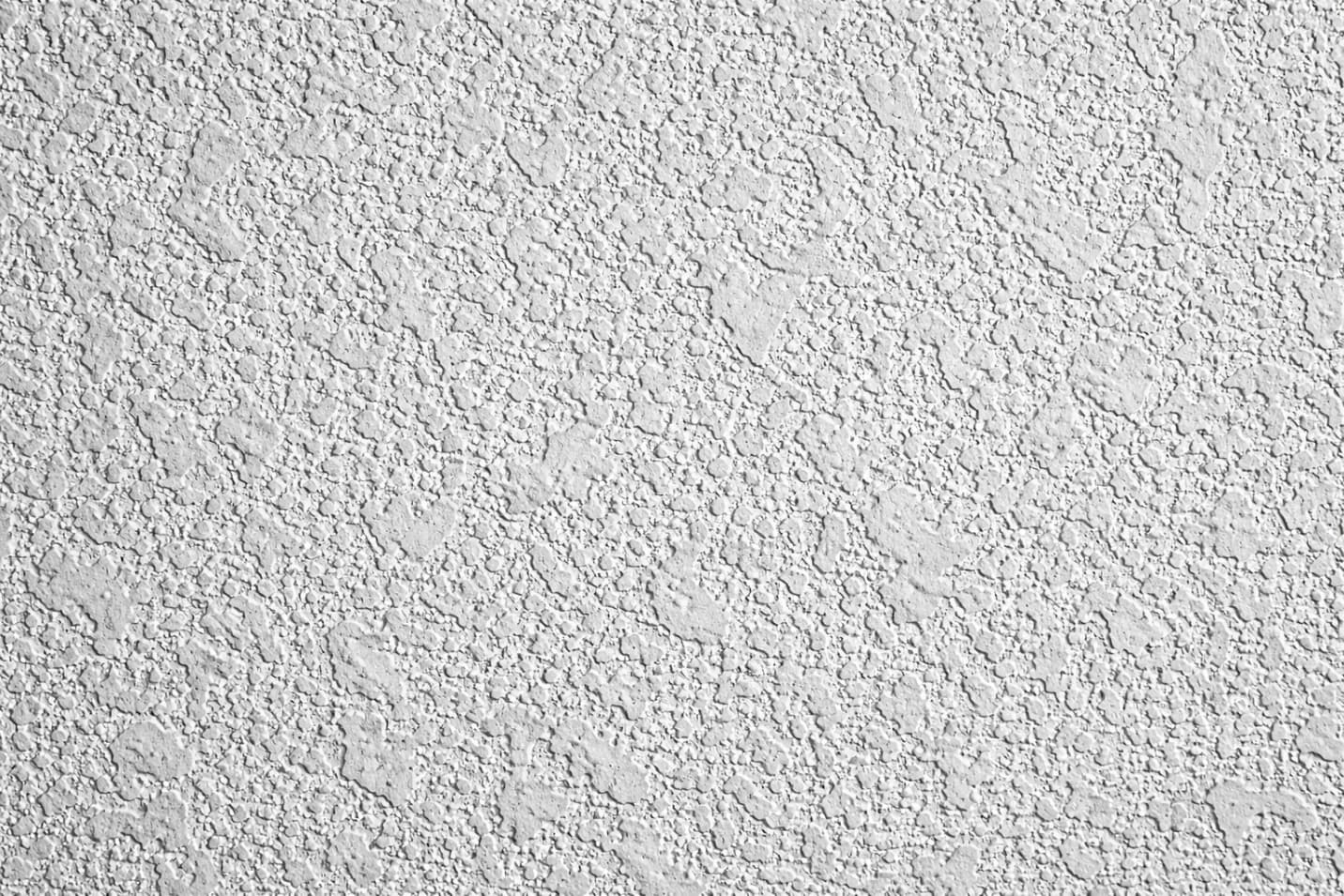
Before choosing wallpaper, identify what you’re working with. Each texture affects how well the adhesive sticks, whether seams show, and how much of the surface shows through the print.
Smooth drywall
The ideal surface
Orange peel
Light stipple texture
Knockdown
Flattened stucco ridges
Plaster
Traditional trowel finish
Sand finish
Fine gritty surface
Brush texture
Linear brush marks
Popcorn
Heavy bumpy stipple
Compatibility
Which textures work best with wallpaper?
Different textures behave very differently. Here’s a quick reference for what to expect from each.
| Wall texture | Works well? | Best wallpaper type |
|---|---|---|
| Smooth wall | ✓Excellent | Any finish |
| Light orange peel | ✓Very good | Thicker peel & stick |
| Light plaster | ✓Good | Textured finish |
| Sand finish | ~Moderate | Darker patterns |
| Knockdown | ~Difficult | Thick custom panels |
| Popcorn | ✕Not recommended | Smooth wall first |
Orange peel
Best wallpaper for orange peel walls
Orange peel is one of the easiest textured walls for wallpaper. If the texture is light, thicker wallpaper usually works well.
Best styles
- →Florals
- →Botanical prints
- →Darker patterns
- →Linen-look finishes
Avoid plain white solid designs — they tend to make bumps more visible.
Knockdown
Wallpaper for knockdown walls
Knockdown walls are harder because the ridges are deeper. Thin wallpaper often shows every bump.
For these walls, use
- →Thicker vinyl wallpaper
- →Custom mural panels
- →Darker prints
- →Busy patterns
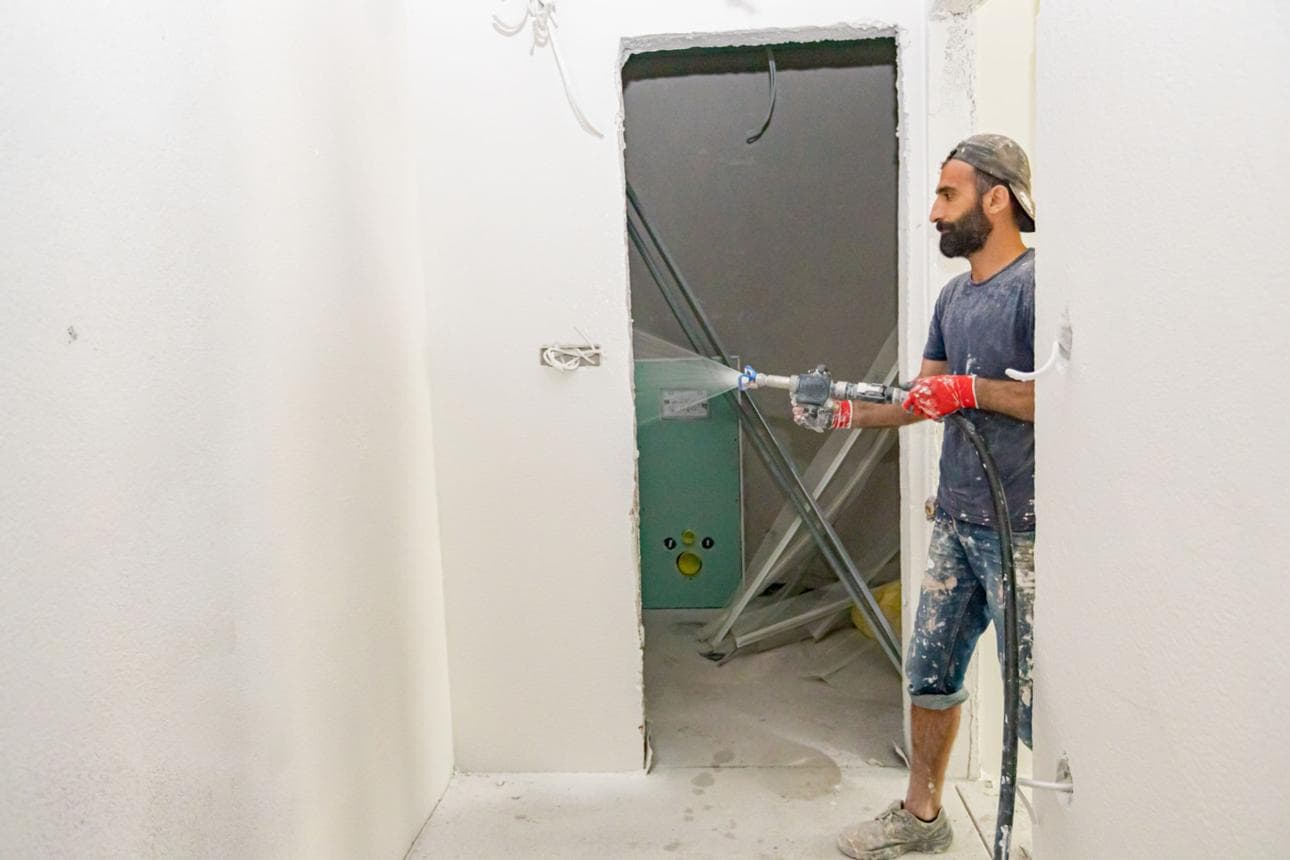
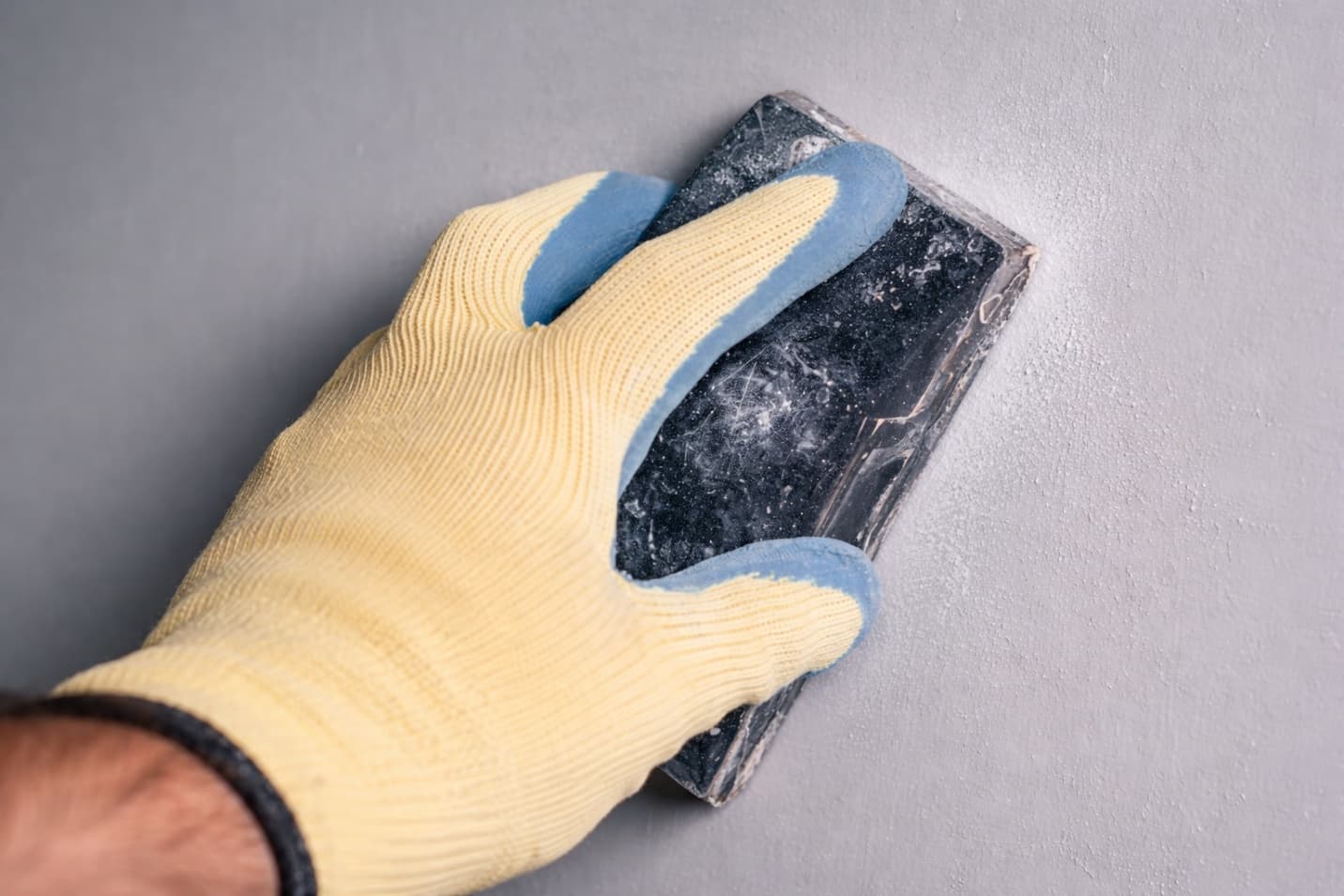
Sometimes a skim coat is the better option before installation.
Prep first
When should you smooth the wall first?
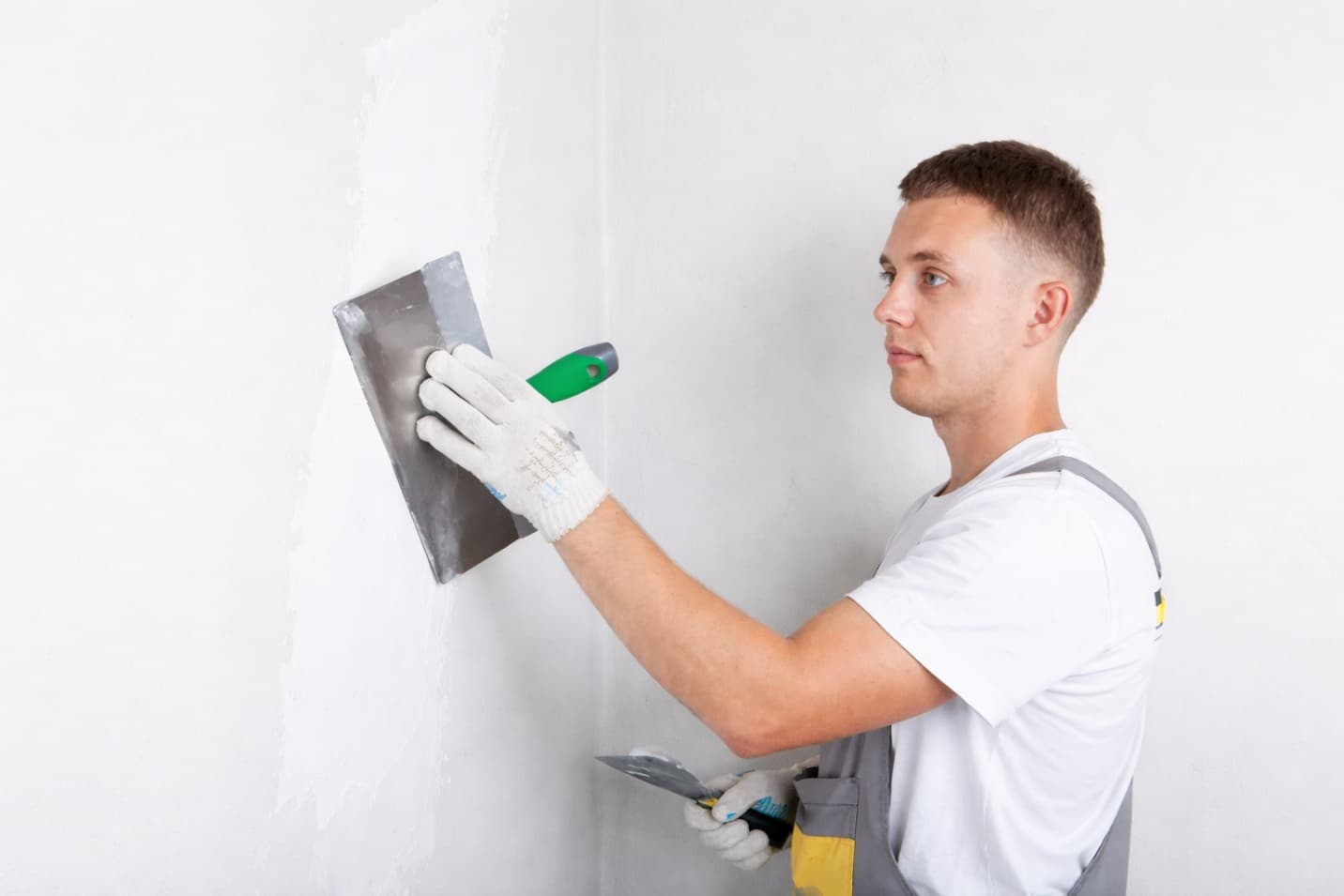
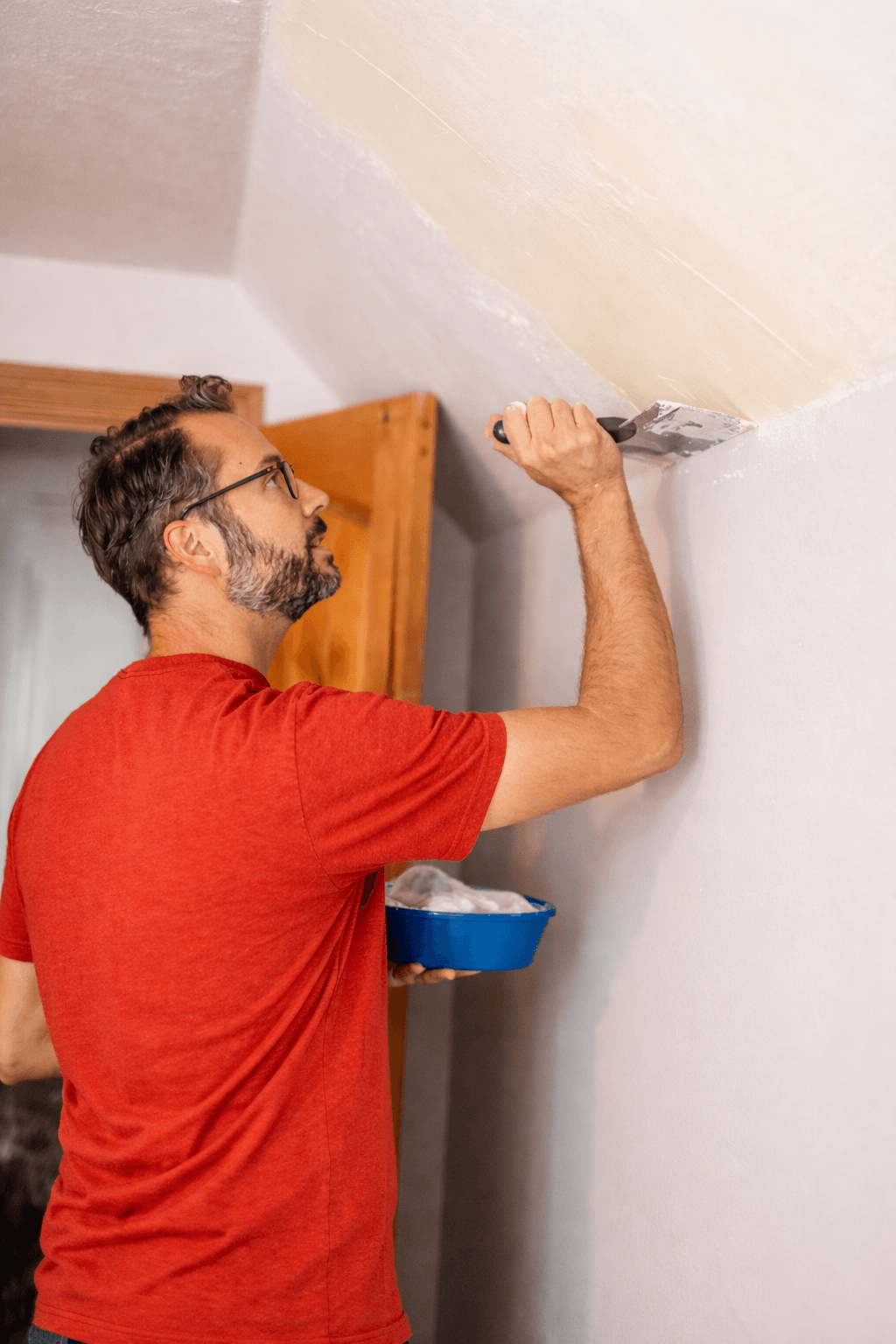
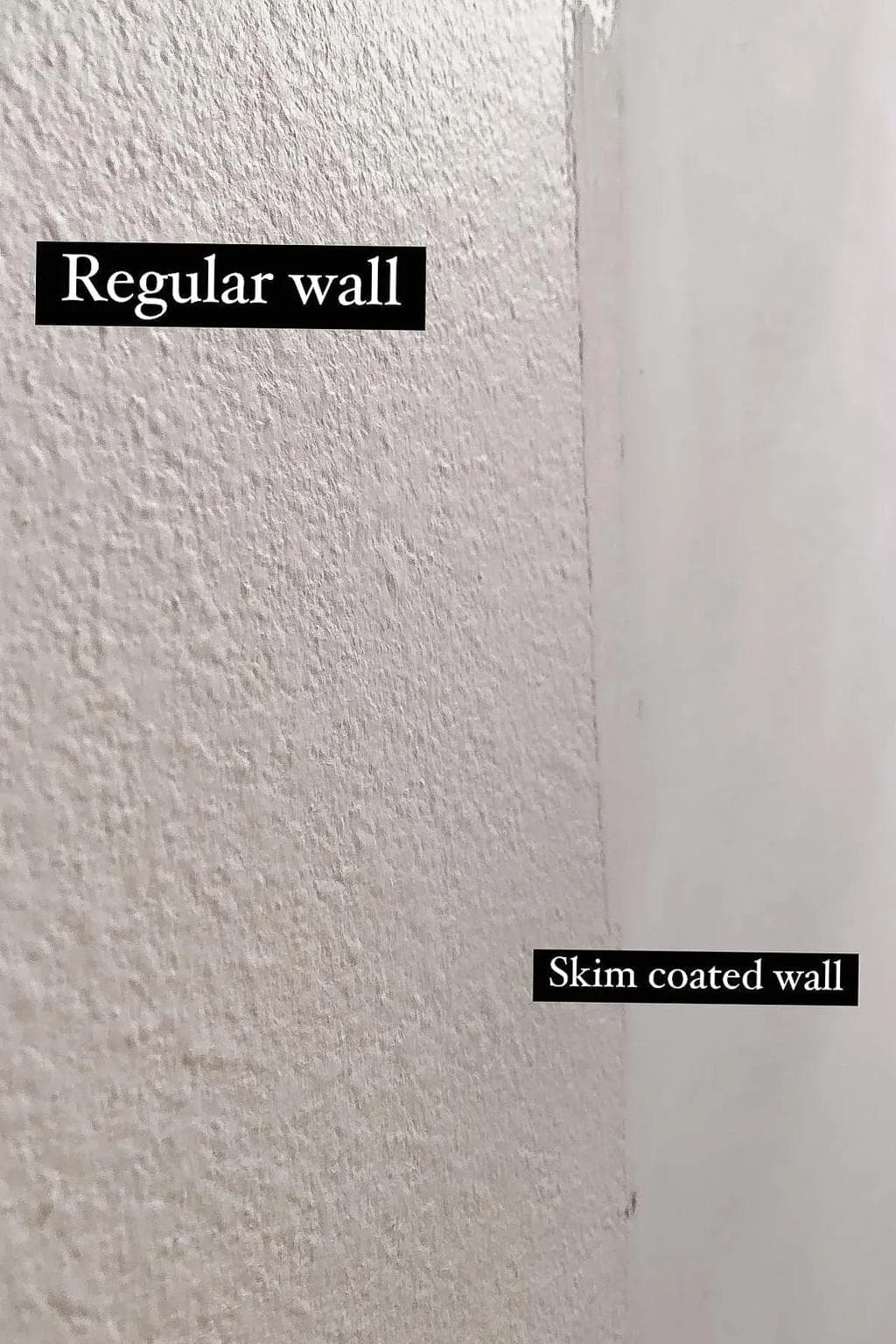
A skim coat or lining paper creates a much better surface. The difference is immediate — see the regular textured wall compared with the skim-coated side.
You should smooth the wall first if you have:
Heavy knockdown
Rough sand finish
Popcorn texture
Deep plaster ridges
Pattern matters
Best wallpaper styles for textured walls
Pattern matters just as much as wall type. Busy designs help hide seams and bumps.
Dark florals
Geometric prints
Brick or stone prints
Mural designs
Textured linen effects
Install
Installation tips for textured walls
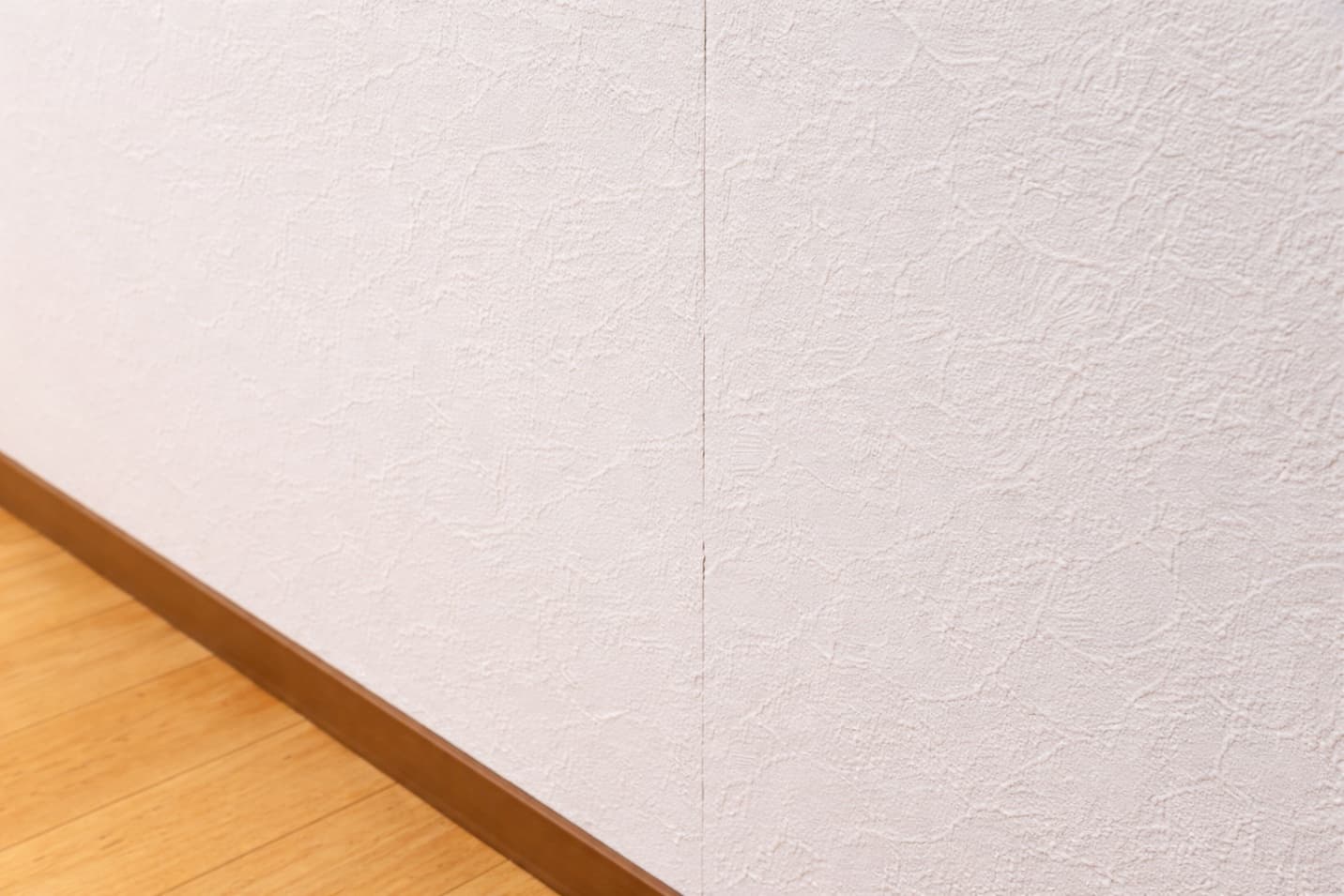
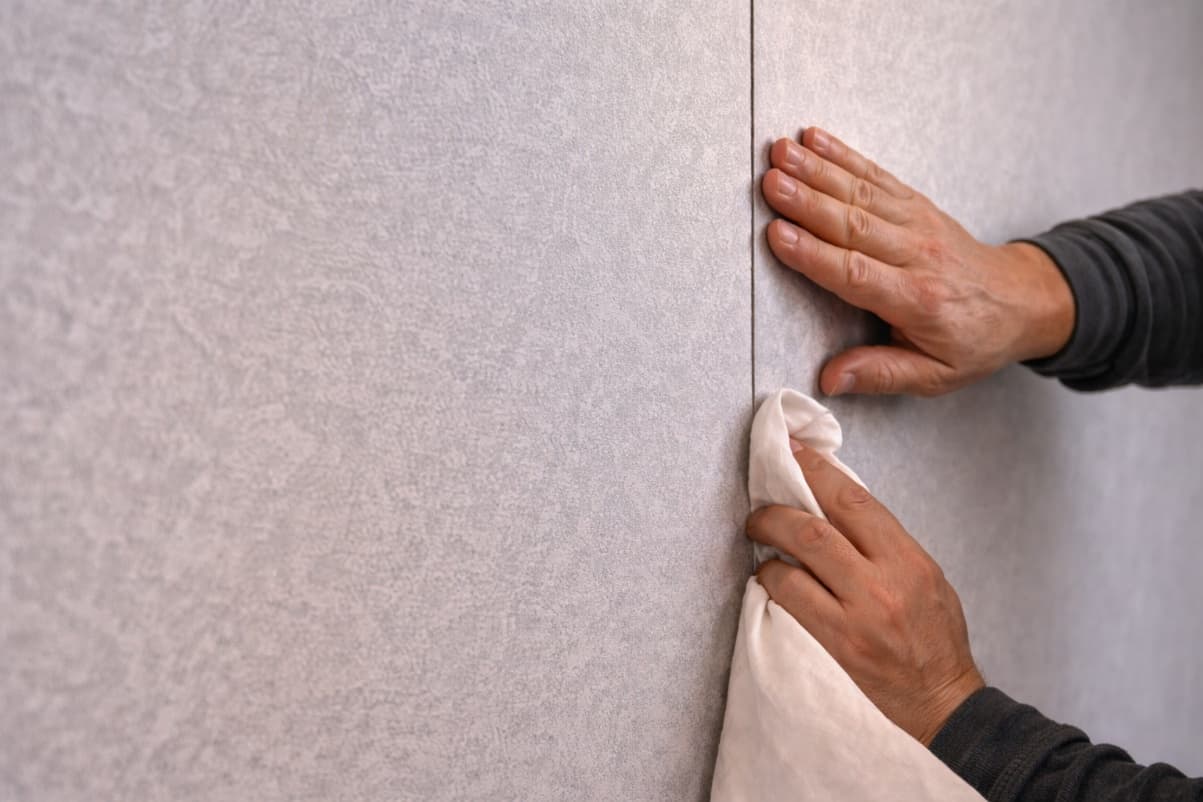
Textured walls need extra pressure around corners and seams. Follow these steps for the best result.
Read the full installation guide- 01
Clean dust first
- 02
Use a plumb line
- 03
Peel only 6–12 inches at a time
- 04
Smooth from center outward
- 05
Press seams firmly
- 06
Work in daylight
FAQ
Frequently asked questions
Still not sure if wallpaper will work on your wall? Get in touch — we’ll help you figure it out.
Can wallpaper stick to textured walls?+
Yes, especially on light orange peel and light plaster.
What wall texture is hardest for wallpaper?+
Heavy knockdown and popcorn are usually the hardest.
Will seams show?+
Less so with darker patterns and textured finishes.
Ready to get started?
Find the right wallpaper
for your wall type
The key isn’t just choosing a beautiful design — it’s choosing the right finish and pattern for your wall texture. Jovorie offers custom-fit panels and textured finishes that create a more seamless look, even on lightly textured walls.